Search This Blog

Monday, 22 August 2011

Mountain of the Moon - Part 8

The man-eating lions


In "Mountain of the Moon", the workers building the railway are bedevilled by a pair of man-eating lions. There is an uncanny resemblance of this part of the story with the true story of the man-eaters of Tsavo. The two lions who caused so much depredation have been immortalised by Lt-Col. J H Patterson in his classic book published in 1917 - check this out.

Wikipedia has this to say about Patterson and the Tsavo lions: "In 1898, then Lt.-Col. Patterson was commissioned by the British East Africa Company to oversee the construction of a railway bridge over the Tsavo river in present-day Kenya. He arrived at the site in March of that year...Almost immediately after his arrival, lion attacks began to take place on the worker population, with the lions dragging men out of their tents at night and feeding on their victims. Despite the building of thorn barriers (bomas) around the camps, bonfires at night and strict after-dark curfews, the attacks escalated dramatically, to the point where the bridge construction eventually ceased due to a fearful, mass departure of the work force. Along with the obvious financial consequences of the work stoppage, Patterson also faced the challenge of maintaining his authority and even his personal safety at this remote site against the increasingly hostile and superstitious workers, many of whom were convinced that the lions were in fact evil spirits, come to punish those who worked at Tsavo, and that he was the cause of the misfortune because the attacks had coincided with his arrival....

"With his reputation, livelihood and safety at stake, Patterson, an experienced tiger hunter from his military service in India, undertook an extensive effort to deal with the crisis and after months of attempts and near misses, he finally killed the first lion on the night of 9 December 1898, and killed the second one on the morning of December 29 (narrowly escaping death in the process). The lions were maneless like many others in the Tsavo area and both were exceptionally large. Each lion was over nine feet long from nose to tip of tail and required eight men to carry it back to the camp."

The lions are now on permanent display at Field Museum in Chicago, Illinois, USA.


A movie, "The Ghost and the Darkness", has been made based on this story.

Mountain of the Moon - Part 7

The Uganda Railways 


Found some great pictures of the Uganda Railways from the early part of the 20th century (Source - http://www.sikh-heritage.co.uk/heritage/sikhhert%20EAfrica/sikhsEAfrica.htm).


(Source - Library of Congress Prints and Photographs Division Washington, D.C. 20540 USA, Carpenter Collection)
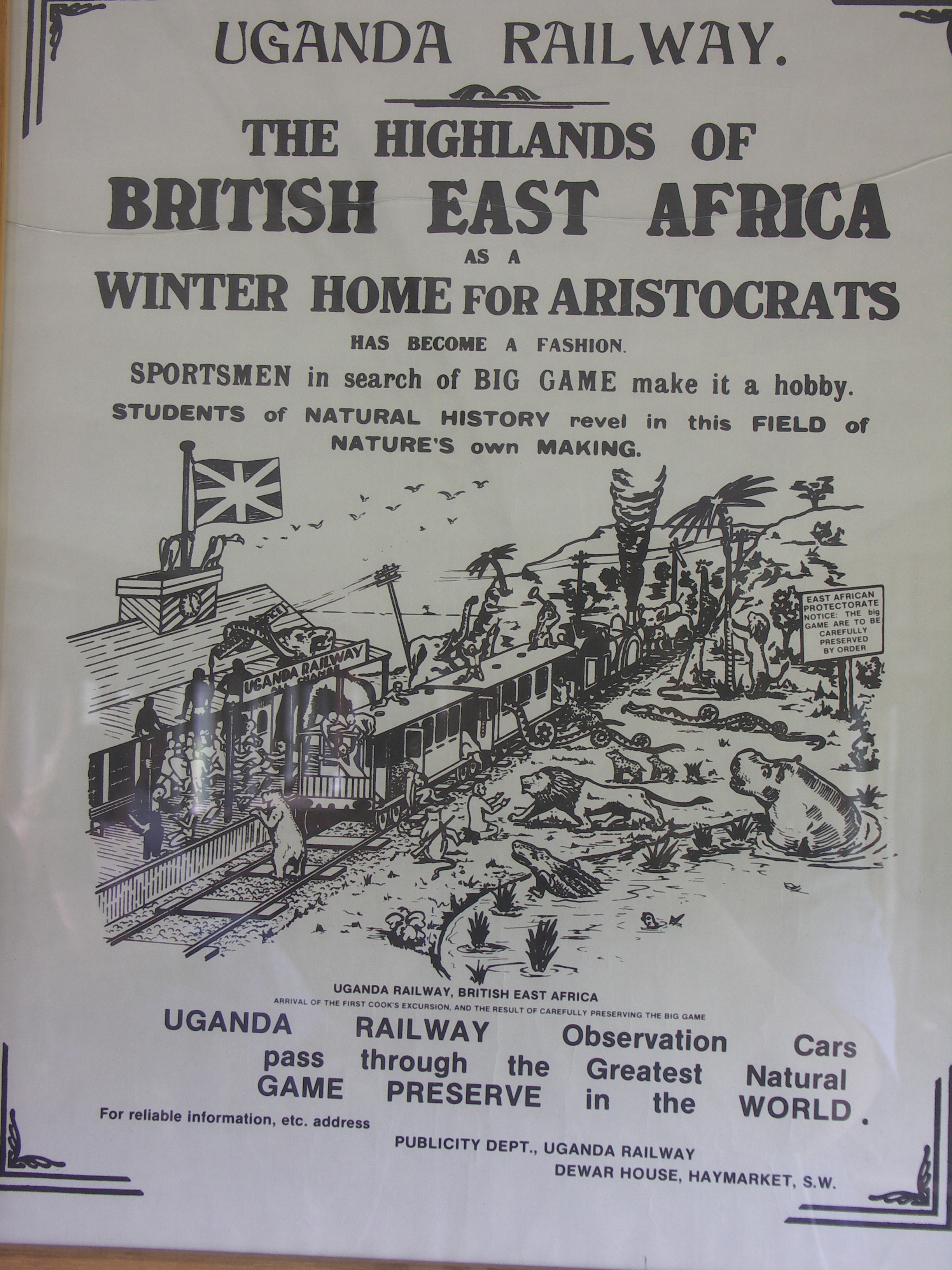
There's this GREAT poster for the Railways from Wikimedia Commons.

Wednesday, 17 August 2011

Mountain of the Moon - Part 6

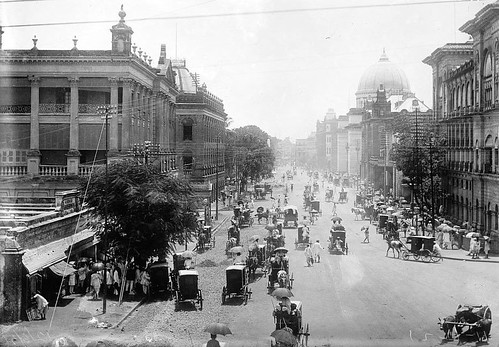
Some pictures of Calcutta of the early 1900s - fascinating stuff! This is the city in which Shankar, the hero of "Chander Pahar" lived and studied. He goes to college in Calcutta; the author doesn't mention which. I dug out some old pictures of Calcutta of the early 1900s, which may be of interest. This one is from http://www.flickr.com/photos/39476299@N02/5307501414/ - titled "European Quarter Calcutta 1900's".


Here's another one - "Calcutta India Great Eastern Hotel 1900's Postcard":

Here's one titled "Presidency College, Calcutta, c 1925"

I am sure some of my friends can add to this wonderful collection of photos of Calcutta of a century ago.

Tuesday, 16 August 2011

Mountain of the Moon - Part 5

A friend has sent this wonderful set interesting stuff on Chander Pahar.

There is this wonderful link: http://gauravdas.podbean.com/2009/11/05/episode-12-chander-pahar-16/

Some of the text in the page runs as follows; I just can't wait to explore those links!

"Bibhutibhusan Bandopadhaya's adventure classic- CHANDER PAHAR or 'Mountain of the Moon'.
First episode of a total of six episodes. It is early 1900s. Shankar, a not so ordinary Bengali lad seeks a life extraordinary: He journeys to then British East Africa, to work for Uganda Railways. This is the story of his adventures in Africa. 

Episode artwork is by Gautam Karan. More pictures by Gautam'da at we-and-our-world.blogspot.com/ 

Follow Shankar on his adventures:
Interesting insights into and factoids about people and places in CHANDER PAHARhttp://banglagolpopodcast.blogspot.com/" 


Mountain of the Moon - Part 4

The author, Bibhutibhushan, the master that he was, did a fantastic job of creating a world that he had never seen! He lived for a long time in the small town of Ghatshila, in Jharkhand, and to my knowledge (incomplete though that is), he had never gone to Africa. But so vivid was his writing that I knew what a baobab tree would look like, decades before I actually saw one.


Wikipedia says that the other common names include (among others) "upside-down tree, and monkey bread tree". After seeing this picture, I think I know why.

Mountain of the Moon - Part 3


The blurb on the back cover of my book.

Mountain of the Moon - Part 2

The front cover of my book

Mountain of the Moon - part 1

This is a shameless attempt at self-promotion. And the first of many. You have been warned.

I have written another book - this time it is a translation "Chander Pahar", the classic Bengali adventure tale, written by Bibhutibhushan Bandyopadhyay. And, I have started a new blog for this - http://mountain-of-the-moon.blogspot.com/

So, from time to time, I am going to promote this from this blog. Starting now.

My book is a labour of love - I first read the book when I was five years old, and finally at the age of 58, I decided to translate this into English.

The new blog is dedicated to my translation: it has been accepted by a major publisher, and should be hitting the stands soon, hopefully very soon.

Called "Chander Pahar" in the original Bengali, this book is one of the perennial favourites of any Bengali. Chronicling the adventures of a young Bengali man in the forests of Africa. It is considered to be one of the most important adventure novels written in the Bengali language. It is written by one of the greatest writers in the language - Bibhutibhushan Bandopadhyay, who also wrote Pather Panchali, immortalised in film by Satyajit Ray.

When I was five, a little girl, my classmate at school, gave me a copy of the book. Two years ago, when I went searching for a more recent copy, what I found was the very same edition, no changes at all. The cover illustration and the drawings in the book had been done by Satyajit Ray. Here's the cover: